




Dr Isolde Hertess consults patients on the Gold Coast and can assess whether your breast shape fits a tuberous breast pattern, then explain what surgical options may be suitable based on your anatomy, your health, and what can be done safely.
What Is a Tuberous Breast?
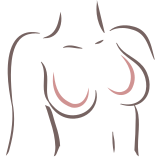
A tuberous breast is usually described by a combination of features that relate to how the breast developed. These features may include:
- A narrow breast base (the breast footprint on the chest)
- Limited volume in the lower part of the breast
- A breast shape that appears more tubular or “constricted”
- A larger or more prominent areola in some patients
- Breast asymmetry, where one side develops differently
Not every patient has all of these features. Some patients have a mild form that mainly affects shape, while others have a more significant constriction that affects breast volume distribution and breast position on the chest.
What Causes Tuberous Breast?
Tuberous breast is generally considered developmental, meaning it relates to how breast tissue formed during puberty. It is not caused by exercise, breastfeeding, or something you did, and it is not something that can be corrected with skin care, massage, or specific bras.
The underlying issue is often described as a constricted breast base and tight tissue in the lower part of the breast. This can limit how the breast expands and how the breast fold forms, which then affects the shape.
How Is Tuberous Breast Assessed?
Assessment usually involves looking at the breast shape from multiple angles and considering:
- Breast base width and breast fold position
- Lower breast tissue and how the breast sits on the chest wall
- Areola size and position
- Skin quality and stretch
- Breast volume and symmetry between sides
Photos and measurements may be used as part of surgical planning, and in some cases, 3D imaging may assist discussion about possible changes, particularly when implants are being considered.
Treatment Options for Tuberous Breast
Surgery is the main treatment option for tuberous breast, and the plan depends on the exact features present. In many cases, more than one technique is used during the same operation because the goal is usually to address both shape and volume distribution, not only size.
Options that may be discussed include the following.
Tissue Release and Breast Base Expansion
A key part of surgery for tuberous breast can involve releasing tight internal tissue, especially in the lower breast. This helps allow the breast to expand into a more natural shape and can support a broader breast base where appropriate. The extent of release needed depends on the severity of constriction and the thickness of breast tissue.
Breast Augmentation Mammoplasty
Some patients consider implants to add volume and help shape, particularly when breast volume is low. In tuberous breast correction, implants are not only about adding size, but they can also assist with filling the lower breast after tissue release. Implant size and placement are planned around your chest width, existing tissue, and skin quality, because these factors affect what is realistic and safe.
Breast Lift (Mastopexy)
A breast lift may be discussed if there is a breast position issue or if reshaping is needed beyond what tissue release and an implant can achieve. A lift can also help adjust nipple and areola position when this is part of the overall pattern. A lift involves scars, and scar patterns vary depending on what is required for safe reshaping.
Areola Reduction or Areola Reshaping
In some tuberous breast cases, the areola is stretched or more prominent. Areola reshaping or reduction may be discussed when it is clinically appropriate, either as a stand-alone step or as part of a lift or reduction pattern. Areola surgery involves scars around the areola, and scarring can vary between patients.
Fat Transfer to the Breast
Fat transfer may be discussed in selected situations to change contour, address asymmetry, or support shape. The volume change is usually modest, and some of the transferred fat is absorbed during healing, which affects the final volume. Fat transfer may be performed on its own in mild cases or as an added step with other breast surgery, depending on your clinical plan.
Asymmetry Correction
If tuberous breast affects one side more than the other, your surgery plan may include different steps for each breast to help increase symmetry. This might mean using different implant sizes, releasing tissue to different degrees, or adding extra reshaping on one side. Even with careful planning, a perfect match is not realistic because natural breast shape is rarely exactly the same on both sides.
More than 30 years of experience, Female support Dr Isolde Hertess – Plastic Surgeon
Offering a female perspective, with more than 30 years of experience in plastic and reconstructive surgery. Dr. Hertess is dedicated to providing patients with information, support, and guidance to help them make informed decisions about their surgical options.

Planning Tuberous Breast Surgery With Dr Isolde Hertess
Planning for tuberous breast correction often takes more time than standard breast surgery because the aim is to address an underlying developmental pattern rather than a single issue.
Dr Isolde Hertess will assess your breast shape, breast base width, tissue thickness, skin quality, and symmetry, then explain what techniques may be suitable, what scars are likely, what recovery may involve, and what risks apply to your situation. For patients on the Gold Coast, this discussion is part of ensuring expectations are realistic and decisions are informed.
Recovery After Tuberous Breast Surgery
Recovery varies and depends on the type of surgery performed and the individual’s healing response. Patients may experience swelling, bruising, and tightness early on, and activity is usually limited for a period to support healing.
If implants are used, there may be additional tightness while the tissues settle. If a lift or areola surgery is performed, wound care and scar care are important parts of recovery.
Follow-up appointments allow healing to be checked and concerns to be addressed early, and it is normal for breast shape to continue changing gradually as swelling reduces and tissues soften.
Risks and Complications
All surgery carries risks, and tuberous breast correction can involve several steps, so it is important to understand both general surgical risks and procedure-specific risks. Results cannot be guaranteed, and further surgery may be considered in some cases.
General surgical risks may include:
- Bleeding or haematoma
- Infection
- Fluid collection (seroma)
- Blood clots
- Wound healing problems
- Scarring that may be more noticeable than expected
- Anaesthetic risks
Risks related to breast reshaping and implants may include:
- Changes in nipple or breast sensation
- Asymmetry or ongoing shape differences
- Implant movement or malposition (If implants are used)
- Capsular contracture (If implants are used)
- Implant rupture or deflation (If implants are used)
- Rippling or implant visibility in some body types
- Delayed wound healing, particularly where multiple incisions are required
- Need for further surgery in the future
The risks that matter most depend on your anatomy, your health, and the exact surgical plan, and these should be discussed in detail before deciding to proceed.