


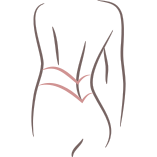


Dr Isolde Hertess offers body lift surgery for suitable patients on the Gold Coast. Planning is based on your anatomy, your health, and what can be done safely, with clear information about scars, recovery, and risks.
What Is a Body Lift?
“Body lift” is a broad term used for surgery that removes excess skin and reshapes the body across a wider area. In many cases, a body lift involves the lower trunk, including the abdomen, hips, outer thighs, and buttock region. In other cases, the term may be used to describe combined reshaping across additional areas, depending on what is appropriate for your anatomy.
Who May Consider a Body Lift?
A body lift may be considered by patients who have:
- Excess skin after significant weight loss
- Persistent skin laxity around the abdomen, hips, and back
- Skin folds that cause irritation or recurrent rash in selected cases
- A body contour change that remains despite stable weight
Suitability depends on your health and factors that influence wound healing. Smoking or vaping can increase the risk of delayed wound healing and other complications, so this is an important part of assessment.
Dr Isolde Hertess will assess suitability for body lift surgery on the Gold Coast by examining skin distribution, tissue quality, previous scars, and the safest way to approach the areas involved.
More than 30 years of experience, Female support Dr Isolde Hertess – Plastic Surgeon
Offering a female perspective, with more than 30 years of experience in plastic and reconstructive surgery. Dr. Hertess is dedicated to providing patients with information, support, and guidance to help them make informed decisions about their surgical options.

Planning a Body Lift With Dr Isolde Hertess
Body lift planning is detailed because the procedure involves larger areas of tissue reshaping and longer incision lines. The focus is on matching the technique to your anatomy and setting clear expectations about scars, recovery, and risk.
Key planning points often include:
Scar Pattern and Scar Location
A lower body lift usually involves a long incision line that can extend around much of the waistline. Scar placement is planned around your anatomy and how much skin needs to be removed. Scars can remain visible, and scar appearance varies between patients.
Abdominal Wall Tightening
In some cases, abdominal wall tightening may be included if there is laxity or separation that can be addressed safely. This is discussed in practical terms, including what it may change and what it cannot change, and how it may affect early recovery.
Previous Surgery and Existing Scars
Previous abdominal or weight loss surgery can affect planning, including blood supply to the tissues and where incisions can be placed. Previous surgery does not automatically prevent a body lift, but careful assessment is important so the approach is chosen safely.
Health and Healing Factors
Body lift surgery involves longer incisions and a larger area of healing, so healing demands can be higher. Some medical conditions, medications, and nutrition can affect healing. Smoking or vaping is also an important risk factor and is discussed as part of planning.
Hospital and Anaesthetic
Body lift surgery is typically performed in an accredited hospital setting under general anaesthesia. Planning includes discussion of expected time off work, activity limits, and the follow-up schedule needed to monitor healing.
What Happens During a Body Lift Procedure?
The exact steps depend on the type of body lift and the areas being addressed. In a lower body lift, surgery generally involves removing excess skin and reshaping tissues across the lower trunk. If abdominal wall tightening is included, it is performed as part of the overall plan.
Because body lift surgery involves larger incision lines, careful closure and wound management are important parts of the procedure. Your plan will be explained in advance so you understand what areas are being addressed and what scars are expected.
Body Lift Risks
All surgery carries risks. Body lift surgery has additional considerations because it involves longer incision lines and a larger area of healing.
General surgical risks may include:
- Bleeding or haematoma
- Infection
- Fluid collection (seroma)
- Wound healing problems
- Scarring that may be more noticeable than expected
- Anaesthetic risks and rare serious complications, including blood clots
Body lift-specific risks may include:
- Delayed wound healing along longer incision lines
- Skin or tissue loss in areas under tension
- Changes in skin sensation, including numbness
- Contour irregularity or asymmetry
- Persistent swelling
- Discomfort that lasts longer than expected
- Need for further surgery in the future
These risks vary depending on your health history and the surgical plan, and they should be discussed in a way that is specific to you.