





Dr Isolde Hertess performs nipple and areola reduction for suitable patients on the Gold Coast. Planning is based on your anatomy, your goals, and what can be done safely, with a clear discussion about scarring, recovery, and risks.
View our gallery of past patient results
See our gallery of real patient results from past surgeries performed by Dr Isolde Hertess. Patient results should not be viewed as a reflection of results other patients may experience
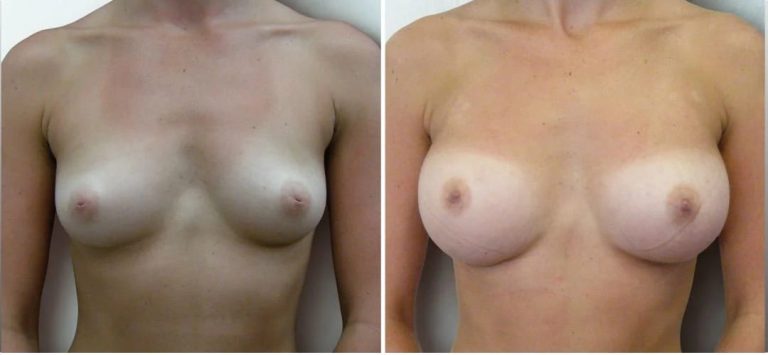
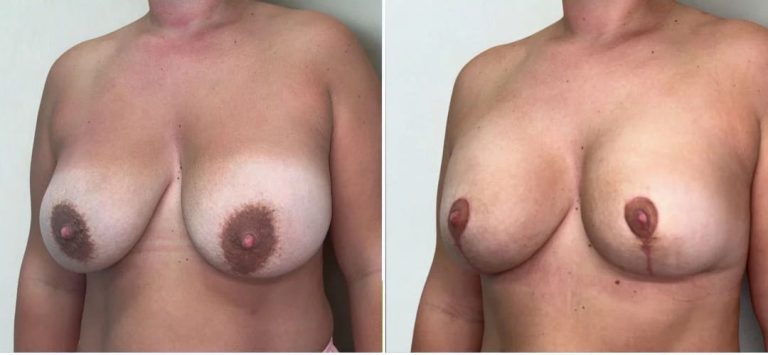
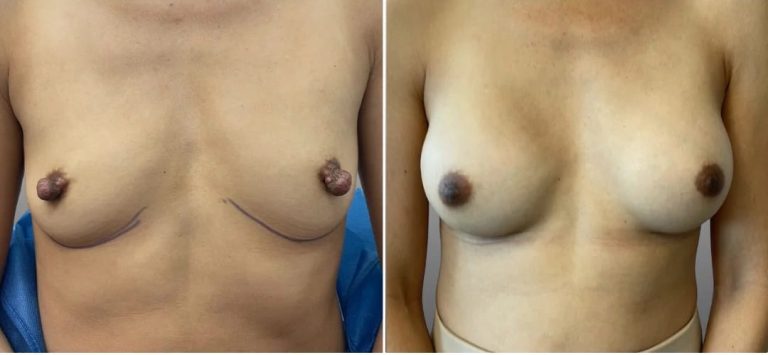
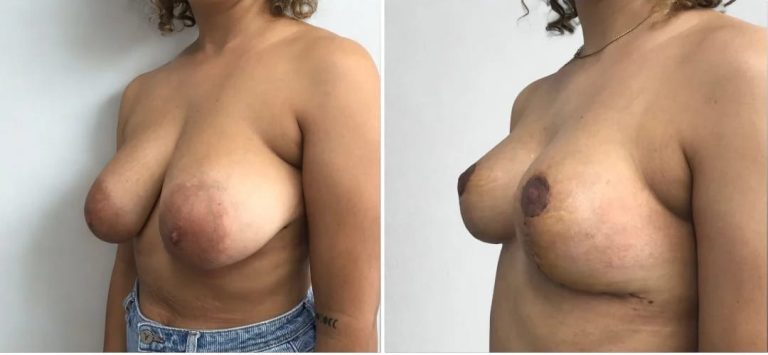
Disclaimer: The outcomes shown are only relevant for that patient and do not necessarily reflect the results other patients may experience. Results may vary due to many factors, including the individual’s genetics, diet, and exercise.
What Is Nipple Reduction?
Nipple reduction reduces nipple height, nipple width, or both. The technique varies depending on the type of change needed, because nipples can differ in size, projection, and shape. The focus is on creating a nipple size that is more in proportion to the breast and areola, while keeping expectations realistic and safety as the priority.
What Is Areola Reduction?
This surgical procedure reduces the diameter of the areola. It usually involves removing a ring of skin from around the areola and closing the area with stitches so the areola heals at a smaller size. The incision is typically placed along the edge of the areola, which is where the scar will be.
Areola reduction is commonly performed:
- As a stand-alone procedure, in selected cases
- As part of a breast lift (mastopexy)
- As part of breast reduction surgery
- During revision breast surgery, depending on the plan
Who May Consider Nipple and Areola Reduction?
Patients may consider nipple and areola reduction for reasons such as:
- The nipple feels more prominent or projects more than you would like
- The areola appears larger than preferred
- There is areola stretching after pregnancy, breastfeeding, or weight changes
- There is asymmetry between the sides
- A previous breast surgery has changed the nipple or areola appearance
Suitability depends on your anatomy and health factors that affect healing. If you’re considering nipple reduction, areola reduction, or a combined approach on the Gold Coast, Dr Isolde Hertess can advise what may be suitable for you.
Planning Nipple and Areola Reduction With Dr Isolde Hertess
Planning begins with a physical assessment and a discussion about what you want to change. It also includes an explanation of the limits of surgery, because there are important considerations around scarring, sensation, and blood supply.
Key planning points often include:
Size and Shape Goals
The plan focuses on the size and shape change that is possible while maintaining safety and healthy tissue.
Scarring and Incision Lines
All surgery involves scars. Nipple and areola reduction usually involves a scar around the edge of the areola, and nipple reduction can also leave scarring on the nipple itself. Scars can remain visible, and scar appearance varies between patients.
Sensation and Healing
Changes in nipple sensation can occur, and this can be temporary or permanent. Healing varies between patients, and careful aftercare is important.
Breastfeeding Considerations
Nipple and areola surgery may affect breastfeeding. Breastfeeding may still be possible for some patients, but it cannot be guaranteed. If breastfeeding is important to you, this should be discussed during planning.
Combining With Other Breast Surgery
Nipple and areola reduction can be performed alongside other procedures such as a breast lift, breast reduction, or implant surgery. Combining procedures can be appropriate, but it depends on your anatomy and the safest surgical plan.
More than 30 years of experience, Female support Dr Isolde Hertess – Plastic Surgeon
Offering a female perspective, with more than 30 years of experience in plastic and reconstructive surgery. Dr. Hertess is dedicated to providing patients with information, support, and guidance to help them make informed decisions about their surgical options.

Recovery After Nipple and Areola Reduction
Recovery varies, but patients can expect tenderness, swelling, and bruising in the early period. Keeping pressure off the area and following wound care instructions is important to support healing.
You will be given guidance on:
- Wound care and dressings
- Showering and activity limits
- Returning to exercise
- Follow-up appointments
Scar care may be discussed once the incisions have healed, and changes in scar appearance can continue over time.
Nipple and Areola Reduction Risks
All surgery carries risks. Nipple and areola surgery has risks related to scarring, sensation, and healing, as well as general surgical risks.
General surgical risks may include:
- Bleeding or haematoma
- Infection
- Fluid collection (seroma)
- Wound healing problems
- Blood clots
- Scarring that may be more noticeable than expected
- Anaesthetic risks
Nipple and areola reduction-specific risks may include:
- Changes in nipple sensation (temporary or permanent)
- Uneven shape or size between sides
- Scars around the areola that may widen or become more noticeable
- Delayed wound healing
- Loss of pigment or colour change in the areola
- Blood supply problems affecting the nipple-areola complex
- Difficulty breastfeeding or reduced milk supply
- The need for further surgery
The risks that matter most differ between patients and should be discussed in relation to your anatomy, your health history, and the planned technique.