


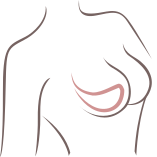


Dr Isolde Hertess may discuss an internal bra technique with patients on the Gold Coast when it is clinically appropriate, and when the anatomy suggests that added internal support could assist with shaping and stability during healing.
What Does “Internal Bra” Mean?
In breast surgery, “internal bra” is a term used for extra support placed inside the breast during some procedures. It usually refers to a surgical mesh or similar support material that is positioned and secured during the operation to support the lower part of the breast and, when implants are used, the implant pocket.
It is important to understand that an internal bra does not guarantee a specific outcome, and it does not stop natural changes from ageing, gravity, weight changes, or pregnancy. Instead, it is one method that may be considered to support tissues in selected cases.
Why Might An Internal Bra Be Considered?
An internal bra may be discussed when extra support is needed to help the tissues hold shape or keep an implant in position. This may be considered if the tissue is thinner, there is skin laxity, there has been previous breast surgery, or there have been significant weight changes.
Situations where it may be considered include:
Breast Augmentation With Lift
When a lift and implants are combined, the surgery involves both reshaping and supporting the breast, and the tissues are under more demand during healing. In some cases, added internal support may be considered as part of the plan.
Implant Revision Surgery
If implants have moved over time, or if the implant pocket needs correction, extra internal support may be used to help stabilise the pocket and reduce the chance of early shifting while healing occurs.
Implant Removal and Replacement
When implants are removed and replaced, the breast tissues and implant pocket may already be scarred or stretched. In selected cases, added support may be considered to help with pocket control and shape.
Tissue Changes After Pregnancy or Weight Loss
After pregnancy or significant weight loss, skin and tissue may be looser and less supportive. If surgery is being considered, the quality of the tissue can influence whether extra support is discussed.
Dr Isolde Hertess will assess tissue quality and breast shape during consultations on the Gold Coast, then explain whether an internal bra technique is relevant to the surgical plan.
What Materials Are Used?
“Internal bra” usually refers to a surgical mesh or similar support material placed inside the breast. Different materials can be used, including:
- Synthetic mesh, used to provide support while healing occurs
- Biologic or tissue-based scaffolds, used in selected situations
The choice of material depends on the procedure being performed, the condition of the tissue, medical history, and the risk profile for that individual. The clinic will explain what is being considered and why, including what is known about benefits, limits, and risks.
How Is It Used During Surgery?
An internal bra is placed during the operation as part of the surgical plan. In implant surgery, it may be used to support the implant pocket or reinforce tissue in the lower breast. In lift or revision surgery, it may be used to support reshaping and help hold the breast position during healing.
The exact technique varies because breast anatomy varies. The amount of support needed, where it is placed, and how it is secured depends on the individual and the procedure being performed.
Who May Be Suitable?
Whether an internal bra is appropriate depends on your anatomy and the type of surgery planned. Factors that may influence suitability include:
- Skin quality and tissue thickness
- The amount of breast skin laxity and the level of reshaping required
- Previous breast surgery and scar tissue
- Smoking or vaping, which can increase wound healing risk
- Medical conditions that affect healing or infection risk
- The type of breast procedure being planned
Dr Isolde Hertess will take these factors into account for patients on the Gold Coast and explain whether an internal bra technique is appropriate, along with the limitations that should be understood.
More than 30 years of experience, Female support Dr Isolde Hertess – Plastic Surgeon
Offering a female perspective, with more than 30 years of experience in plastic and reconstructive surgery. Dr. Hertess is dedicated to providing patients with information, support, and guidance to help them make informed decisions about their surgical options.

Recovery Considerations
Recovery varies depending on the procedure. If an internal bra is used, you will still need to follow a careful recovery plan. It may be included as part of the overall approach to support healing.
Swelling, tightness, and discomfort are common in the early period after breast surgery, and activity is usually limited while the area heals. Light tasks can often be resumed earlier, while lifting, gym training, and more physical work usually need more time because the chest and breast tissues need time to heal.
Risks And Possible Complications
All surgery carries risks, and an internal bra technique adds its own considerations because a supportive material is placed internally. Complications can occur and should be understood before any decision is made.
General surgical risks may include:
- Bleeding or haematoma
- Infection
- Fluid collection (seroma)
- Wound healing problems
- Blood clots
- Scarring that may be more noticeable than expected
- Changes in breast or nipple sensation
- Anaesthetic risks
Internal support material risks may include:
- Infection related to the material
- Ongoing fluid collection
- Inflammation or irritation
- Palpability (being able to feel the material)
- Discomfort that persists longer than expected
- Delayed healing in areas under tension
- Need for further surgery if complications occur
The risks that matter most depend on the procedure being performed and the individual’s health history, so they should be discussed in a way that is specific to the planned surgery.