



Dr Isolde Hertess performs explant surgery for patients on the Gold Coast, and the approach is planned around what is happening with the implants and breast tissues, along with your health history and what can be done safely. Because there are different ways to remove breast implants in QLD, it helps to understand the options and what each one involves.
View our gallery of past patient results
See our gallery of real patient results from past surgeries performed by Dr Isolde Hertess. Patient results should not be viewed as a reflection of results other patients may experience.
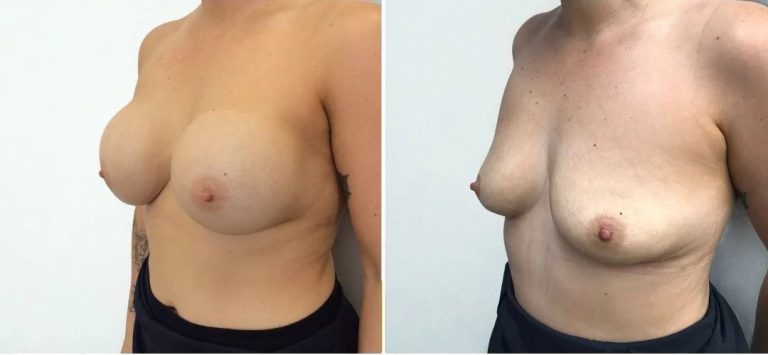
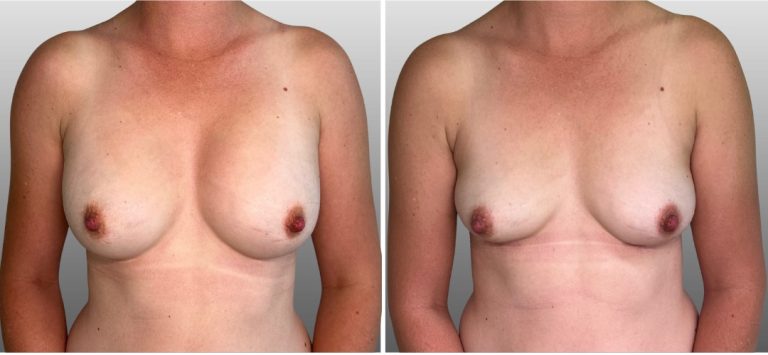

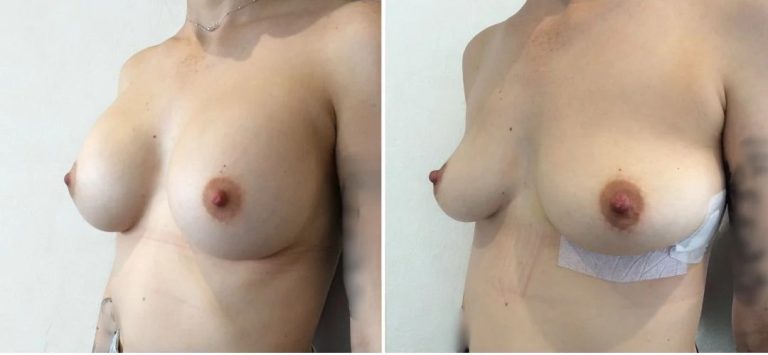
Disclaimer: The outcomes shown are only relevant for that patient and do not necessarily reflect the results other patients may experience. Results may vary due to many factors, including the individual’s genetics, diet, and exercise.
What Is Explant Surgery?
Explant surgery removes breast implants. Depending on the reason for removal and the condition of the surrounding tissue, surgery may involve removing the implant only or removing the implant and some or all of the capsule, which is the scar tissue that naturally forms around an implant.
The capsule is a normal part of the body’s response to an implant. It may remain soft and cause no issues, or it may become firm, uncomfortable, or affect shape. Capsule management is one of the main differences between explant approaches, which is why assessment and planning matter.
Why Patients Consider Breast Implant Removal Surgery
Patients seek explant surgery for a range of reasons, and it is common for more than one factor to be involved. These reasons may include:
- A preference to be without implants
- Changes in breast shape over time
- Discomfort, tightness, or firmness
- Capsular contracture (firm scar tissue around the implant)
- Suspected or confirmed rupture, depending on implant type and imaging
- Implant movement, where an implant sits higher, lower, wider, or unevenly
- A plan to remove implants and replace them with new implants, or remove implants and consider breast lift surgery
Some patients also report a range of general symptoms they connect with their implants. These symptoms can have many causes, so it is important that concerns are assessed carefully and that expectations stay realistic about what surgery can and cannot address.
Explant Options: Implant Only, Capsule Removal, and En Bloc
Explant surgery is not a single technique. The most suitable approach depends on your examination findings, implant history, and the reason for removal.
Implant Removal Only
In some cases, breast implant removal Gold Coast surgery alone may be considered. This may be appropriate when the capsule is thin, soft, and not causing problems, although each case is assessed individually.
Implant Removal With Capsule Removal
When capsule removal is needed, it may be partial or complete depending on the situation. Capsule removal may be discussed when there is capsular contracture, when the capsule is thickened, or when it is contributing to discomfort or shape concerns.
En Bloc Removal
“En bloc” is a term that is sometimes used to describe the removal of the breast implant and capsule together as one unit, where clinically appropriate. It is not necessary or suitable for every patient, and it is not always possible to perform safely in every case, because anatomy and tissue planes differ. Dr Isolde Hertess can explain when an en bloc approach may be considered and when another approach may be safer.
What To Expect From Planning
Explant planning usually starts with understanding your implant history, your concerns, and what outcomes are realistic for your body. During your assessment, Dr Isolde Hertess will discuss the following:
Breast Shape After Removal
Once removal of the breast implant is complete, the breast may sit differently. Some patients have skin laxity or a lower breast position after removal, while others regain shape, depending on their original breast tissue, skin quality, implant size, and how long breast implants have been in place in QLD.
Whether A Breast Lift Is Also Needed
Some patients choose breast implant removal surgery alone, while others consider combining explant surgery with a breast lift (mastopexy) to address skin laxity and reshape the breast. Whether this is suitable depends on your anatomy and what can be done safely in one operation.
Scars And Incisions
Scars depend on where the original incision was made and whether extra incisions are needed for capsule management or reshaping. Scar appearance varies between patients, and scars can remain visible.
Hospital And Anaesthetic
Explant surgery is usually performed in an accredited hospital setting under general anaesthesia. Planning includes discussing recovery, follow-up, and any factors that may increase risk, such as smoking or vaping, certain medications, and some medical conditions.
If you are considering explant surgery on the Gold Coast, Dr Hertess will tailor advice to your situation and explain what is involved in clear terms, including what can be controlled and what can vary during healing.
More than 30 years of experience, Female support Dr Isolde Hertess – Plastic Surgeon
Offering a female perspective, with more than 30 years of experience in cosmetic breast surgery and reconstructive surgery. Dr. Hertess is a female plastic surgeon, dedicated to providing patients with information, support, and guidance to help them make informed decisions about their surgical options.

Recovery After Explant Surgery
Recovery depends on what is done during surgery, including whether capsule removal is performed and whether a lift is included. Swelling, bruising, and tightness are common in the early weeks, and you will usually need to reduce your activity while you heal.
Light day-to-day tasks can often be resumed earlier than exercise and heavy lifting. You may be asked to limit chest and upper body strain for a period, as this can affect comfort and healing. Follow-up appointments are an important part of care because they allow healing to be checked and any concerns to be addressed early.
Breast shape can also change gradually as swelling reduces and the tissues soften, so it can take time before the final shape becomes clear.
Breast Implant Removal Surgery Risks
All surgery carries risks, and explant surgery has risks related to both the operation itself and the condition of the tissues. It is important to understand that results cannot be guaranteed, and further procedures may be considered later if shape concerns remain.
General surgical risks may include:
- Bleeding or haematoma
- Infection
- Fluid collection (seroma)
- Blood clots
- Wound healing problems
- Scarring that may be more noticeable than expected
- Changes in breast or nipple sensation
- Anaesthetic risks
Explant and capsule-related risks may include:
- Ongoing tightness or discomfort
- Breast asymmetry or contour changes (which can be resolved with breast asymmetry surgery)
- Skin laxity or a lower breast position after implant removal
- Changes in nipple position
- Delayed healing, particularly where tissue quality is reduced
- Need for further surgery, such as breast revision or a breast lift
The risks that matter most can differ between patients, and they should be discussed in relation to your health history, your implant history, and the planned procedure.