





Dr Isolde Hertess performs breast implant removal and replacement for patients on the Gold Coast, and planning is based on your anatomy, your health, and the reason you are considering breast revision Gold Coast surgery. Because this is not a standard procedure, the plan needs to match what is happening with the implants and the surrounding tissue, so the approach can be safe and appropriate for you.
View our gallery of past patient results
See our gallery of real patient results from past surgeries performed by Dr Isolde Hertess. Patient results should not be viewed as a reflection of results other patients may experience
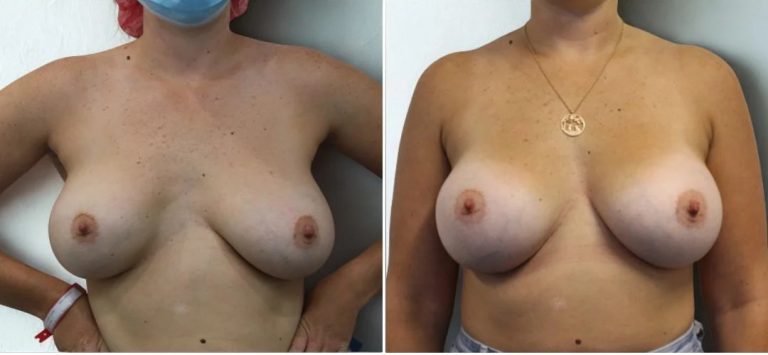

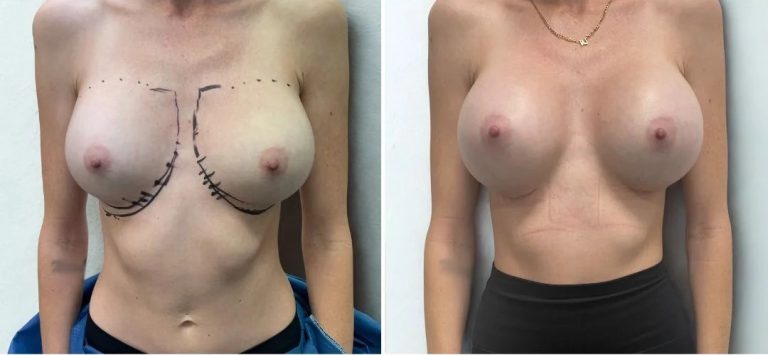
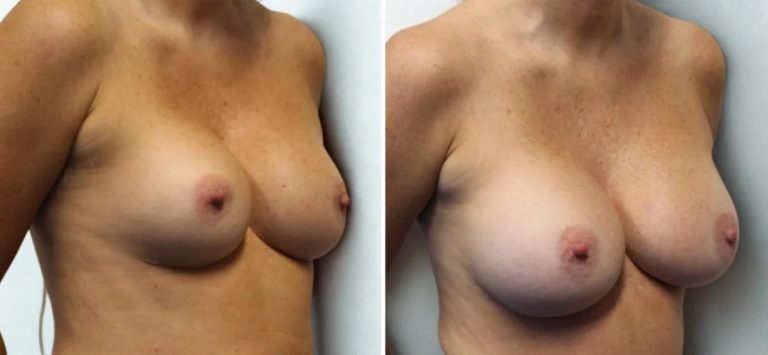
Disclaimer: The outcomes shown are only relevant for that patient and do not necessarily reflect the results other patients may experience. Results may vary due to many factors, including the individual’s genetics, diet, and exercise.
What Is Breast Implant Removal and Replacement?
This procedure involves removing one or both existing breast implants and placing new implants. Depending on the situation, it may also involve additional steps to manage the capsule, which is the scar tissue that naturally forms around an implant, and to change breast shape or position.
Breast implant removal and replacement can sometimes be combined with other procedures, such as a breast augmentation with lift (mastopexy), especially if there is skin laxity or a change in breast position. Whether this is suitable depends on your anatomy and what can be done safely, and this is discussed as part of planning.
Reasons Patients Consider the Procedure
Patients consider breast removal and replacement for a range of reasons, such as:
- Breast changes due to ageing, pregnancy, or weight fluctuations
- Implant movement, where the implant sits too high, too low, too wide, or unevenly
- Capsular contracture, where the scar tissue around the implant becomes firm or uncomfortable and may change the breast shape
- Suspected or confirmed rupture, depending on implant type and imaging findings
- A preference to change the implant size or style
- Revision after previous surgery, where the result is not meeting expectations and a new plan is needed
Dr Isolde Hertess will assess the concern, examine the implants and breast tissue, and explain which options may suit your situation. If there are limits based on tissue quality or previous surgery, these are discussed clearly so you understand what is realistic.
Planning Breast Implant Replacement on the Gold Coast With Dr Isolde Hertess
Breast revision surgery on the Gold Coast needs careful planning because the breast tissue, skin, and capsule may have changed since the original surgery. If you are considering breast implant replacement on the Gold Coast, Dr Hertess – a Specialist Plastic & Reconstructive Surgeon many patients find when searching for a cosmetic surgeon on the Gold Coast – will usually discuss the points below so the plan is based on your body, your goals, and what is safest.
Implant History
If you know your implant type, size, and when they were placed, it helps with planning. If you have operation notes or implant details, bringing them can be useful, but it is not always essential. If you don’t have them, the consultation can still go ahead, and the next steps can be discussed based on your assessment.
Capsule Assessment
A capsule forms around every implant. In many cases, the capsule is soft and does not cause problems, while in other cases, it can be thickened, tightened, or uncomfortable. Capsular contracture is one reason patients consider breast revision on the Gold Coast, and the way the capsule is managed can be an important part of planning. The aim is to address the problem while protecting the surrounding tissues as much as possible.
Implant Selection
New implants are chosen based on your frame, chest width, tissue characteristics, and what you want to change. This is also the time to discuss whether you want to keep a similar size or change it. If you want a smaller implant or a larger implant, it can affect how your skin sits and how the breast shape looks after surgery, so these details matter when creating a plan that suits you.
Implant Position and Pocket Control
If an implant has moved, surgery may include adjusting the pocket that holds it so the new implant is held in a better position. This can help with symmetry and support over time. The approach depends on how the implant has moved and how your tissues are supporting the implant.
Whether A Breast Lift Is Also Needed
After the breast revision surgery on the Gold Coast, some patients still have skin laxity or a lower breast position. A breast lift may be discussed if it is needed to reshape and reposition the breast, especially if the nipple position is lower than you would like or the skin has stretched.
In some situations, a staged approach may be recommended rather than combining everything into a single operation. This is more likely when tissue quality is poor, when there is significant laxity, or when it is safer to separate steps to support healing and predictability.
More than 30 years of experience, Female support Dr Isolde Hertess – Plastic Surgeon
Offering a female perspective, with more than 30 years of experience in plastic and reconstructive surgery. Dr. Hertess is dedicated to providing patients with information, support, and guidance to help them make informed decisions about their surgical options.

Recovery After Gold Coast Breast Revision
Recovery varies depending on what is involved, including whether capsule work is done and whether a lift is included. It is common to have swelling, bruising, and tightness in the early weeks, and activity is usually limited while healing occurs.
Light daily activities can be resumed earlier than exercise or heavy lifting, and the timeline depends on the details of the procedure and how your healing progresses. Follow-up appointments are an important part of breast implant replacement Gold Coast surgery because they allow healing to be checked, wound care to be reviewed, and any concerns to be addressed early.
It is also helpful to keep expectations realistic about early swelling and how the breast shape settles. It can take time for swelling to reduce and tissues to soften, and it is normal for the breast appearance to change gradually during recovery.
Breast Implant Removal and Replacement Risks
Breast implant replacement on the Gold Coast carries risks that can be higher than a first breast augmentation, particularly because tissues may be thinner, scarred, or stretched.
General surgical risks may include:
- Bleeding or haematoma
- Infection
- Fluid collection (seroma)
- Blood clots
- Wound healing problems
- Scarring that may be more noticeable than expected
- Changes in nipple or breast sensation
- Anaesthetic risks
Implant and revision-related risks may include:
- Capsular contracture, including recurrence
- Implant rupture or deflation
- Implant movement or malposition
- Rippling or implant visibility in some body types
- Ongoing discomfort or tightness
- Asymmetry
- The need for further revision surgery in the future
The risks that matter most can differ between patients, and they should be discussed clearly in relation to your health history and the planned procedure, so you feel properly informed before you decide.
Exploring Other Options at Dr Hertess Plastic Surgery
Breast implant removal and replacement is just one part of the broader range of cosmetic breast surgery options available with Dr Hertess. If your goals change during consultation, or if replacement isn’t the right fit for your circumstances, there are other pathways worth discussing.
Some patients considering implant replacement decide they would prefer a larger implant as part of breast enlargement, while others find that removing volume altogether through breast reduction surgery better suits their comfort and lifestyle.
Dr Hertess also provides care beyond breast surgery. For patients with concerns about unusual moles, lesions, or changes to the skin, the practice offers skin cancer treatment on the Gold Coast as part of its broader surgical services, ensuring your care can extend beyond a single procedure if needed.
Every option is discussed on an individual basis, so you can make a fully informed decision about which path, if any, is right for you.