

Dr Isolde Hertess performs mini abdominoplasty for suitable patients on the Gold Coast. The plan is based on your anatomy, your health, and what can be done safely, with clear information about scars, recovery, and risks.
View our gallery of past patient results
See our gallery of real patient results from past surgeries performed by Dr Isolde Hertess. Patient results should not be viewed as a reflection of results other patients may experience

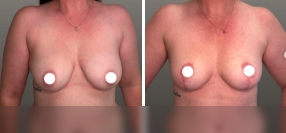
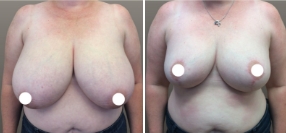
Disclaimer: The outcomes shown are only relevant for that patient and do not necessarily reflect the results other patients may experience. Results may vary due to many factors, including the individual’s genetics, diet, and exercise.
What Is a Mini Abdominoplasty?
A mini abdominoplasty removes excess skin and tissue from the lower abdomen and reshapes that area. Compared with a full abdominoplasty, a mini abdominoplasty usually involves:
- A shorter lower abdominal incision
- Less skin removal overall
- No repositioning of the belly button in most cases
- A more limited area of reshaping
In some patients, limited abdominal wall tightening below the belly button may be included, depending on clinical findings. Mini abdominoplasty does not address significant changes above the belly button.
Who May Consider a Mini Abdominoplasty?
Mini abdominoplasty may be considered by patients who have:
- Excess skin mainly in the lower abdomen
- A lower abdominal contour change that remains despite stable weight
- Skin laxity after pregnancy or weight change that is mainly below the belly button
Suitability is important because a mini abdominoplasty will not address upper abdominal skin laxity or wider abdominal changes. If there is a significant change above the belly button, a full abdominoplasty or another approach may be more appropriate.
Dr Isolde Hertess will assess suitability for mini abdominoplasty on the Gold Coast by examining where the skin laxity is located, your abdominal wall support, and how much reshaping is realistic.
What Concerns Can A Face And Neck Lift Address?
A face and neck lift may be considered for concerns such as:
- Changes in lower face skin firmness
- Changes along the jawline
- Visible neck bands
It is also important to note what surgery may not address. Skin quality issues such as fine lines, sun damage, and pigmentation changes may not change significantly with lifting surgery alone, and other treatment options may be discussed separately if relevant.
What Mini Abdominoplasty Can and Cannot Address
Mini abdominoplasty may address:
- Excess lower abdominal skin
- A lower abdominal contour change related to skin and tissue laxity
- Mild lower abdominal wall laxity
Mini abdominoplasty may not address:
- Excess skin above the belly button
- Significant abdominal wall separation higher up
- Wider changes that extend toward the hips
Understanding these limits is important so expectations are realistic and the procedure choice matches your anatomy.
Planning Mini Abdominoplasty With Dr Isolde Hertess
Planning includes a detailed assessment and a clear discussion about scar placement, how much skin can be removed, and how the abdomen may look once healing is complete. Dr Hertess will also discuss your medical history and any factors that affect wound healing and safety.
Key planning points often include:
Scar Placement and Scarring
The scar is usually placed low across the abdomen. The final scar length depends on how much skin is removed and your anatomy. Scars can remain visible, and scar appearance varies between patients.
Abdominal Wall Tightening
Some patients have mild lower abdominal wall laxity that can be addressed during a mini abdominoplasty, mainly below the belly button. If tightening is part of the plan, it will be explained clearly, including what it may change and what it is unlikely to change.
Previous Abdominal Surgery
Prior abdominal surgery can affect planning, including scar placement and blood supply to tissues. This does not always prevent mini abdominoplasty, but it is important to discuss.
Health Factors That Affect Healing
Smoking or vaping can delay the wound healing process. Other factors, such as medical conditions and medications, can also increase the risk of complications, which are discussed as part of safety planning.
Hospital and Anaesthetic
Mini abdominoplasty is commonly performed in an accredited hospital setting under general anaesthesia. The length of surgery and post-operative care depends on the procedure plan.
27 years of experience, Female support Dr Isolde Hertess – Plastic Surgeon
Offering a female perspective, with more than 27 years of experience in plastic and reconstructive surgery. Dr. Hertess is dedicated to providing patients with information, support, and guidance to help them make informed decisions about their surgical options.

Recovery After Mini Abdominoplasty
Recovery varies, and swelling, tightness, bruising, and tiredness are common early on, so you will usually need to reduce your activity while you heal. You may need time away from work, especially if your job is physical, and you will be advised on when it is safe to return to lifting, exercise, and more demanding activities.
Gentle walking may be recommended to support circulation, and a compression garment may be advised depending on your surgery plan, with follow-up appointments used to check healing and adjust guidance as needed. It is also normal for the lower abdomen to feel tight early on, and the abdominal shape can continue to change as swelling reduces and the tissues soften.
Mini Abdominoplasty Risks
All surgery carries risks. Mini abdominoplasty has risks related to wound healing, scarring, and tissue reshaping, even though it is less extensive than a full abdominoplasty.
General surgical risks may include:
- Bleeding or haematoma
- Infection
- Fluid collection (seroma)
- Blood clots
- Wound healing problems
- Scarring that may be more noticeable than expected
- Anaesthetic risks
Mini abdominoplasty-specific risks may include:
- Delayed wound healing
- Persistent swelling
- Changes in skin sensation
- Asymmetry
- Fluid collection that may need drainage
- Ongoing discomfort that lasts longer than expected
- The need for further surgery in the future
Your individual risk profile depends on your health history and the surgical plan, and these risks should be discussed in a way that is specific to you.