






Dr Isolde Hertess performs breast reduction and breast lift surgery for patients on the Gold Coast, and this procedure is sometimes called reduction mammoplasty. A lift component is commonly included because removing breast tissue usually requires reshaping and repositioning the breast and nipple.
View our gallery of past patient results
See our gallery of real patient results from past surgeries performed by Dr Isolde Hertess. Patient results should not be viewed as a reflection of results other patients may experience
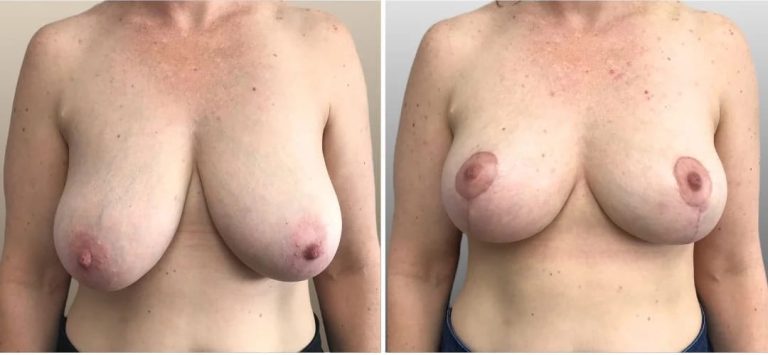
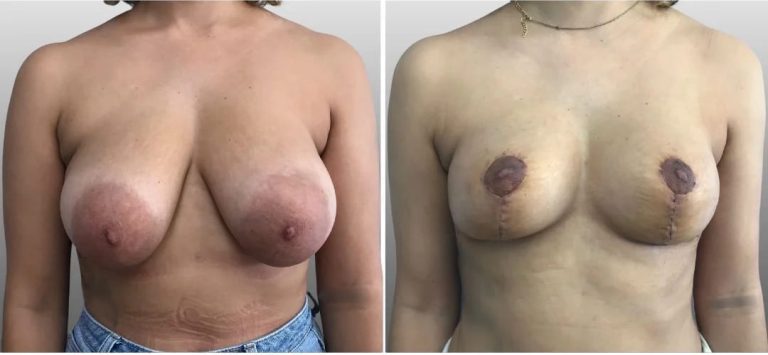
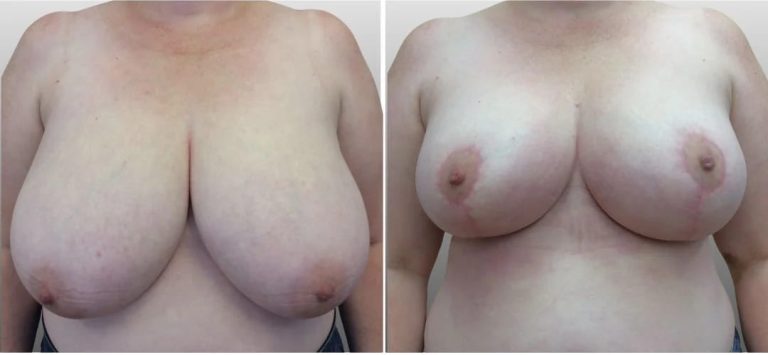
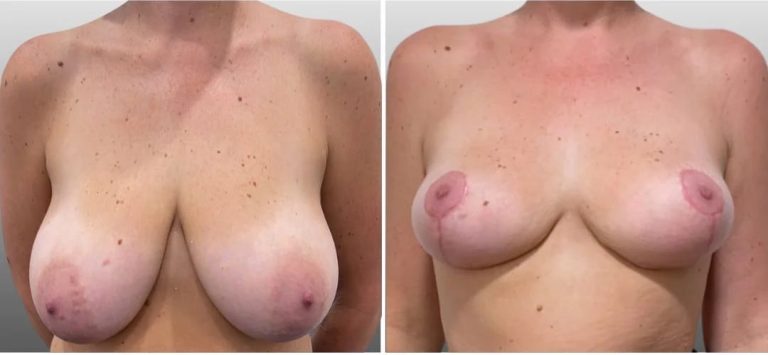
Disclaimer: The outcomes shown are only relevant for that patient and do not necessarily reflect the results other patients may experience. Results may vary due to many factors, including the individual’s genetics, diet, and exercise.
What Is Breast Reduction and Breast Lift Surgery?
Breast reduction surgery removes a measured amount of breast tissue and skin to reduce size and weight, while a breast lift reshapes the remaining tissue and repositions the breast higher on the chest. The nipple and areola are usually moved to a more suitable position, and the areola may also be resized if appropriate, depending on your anatomy.
Although it is described as one surgery, it involves several steps that work together:
- Reducing breast volume
- Reshaping the remaining breast tissue
- Repositioning the breast higher on the chest
- Repositioning the nipple and areola, where required
- Managing excess skin to support the new shape
- Outcomes vary between patients, and results cannot be guaranteed.
Why Patients Consider Breast Reduction With Lift
Patients consider breast reduction and lift surgery for different reasons, and it is common for physical symptoms and day-to-day practical issues to be involved. These may include:
- Neck, shoulder, or upper back discomfort related to breast weight
- Skin irritation or rash under the breast fold
- Difficulty with physical activity due to breast weight and movement
- A breast position that has changed over time
During assessment, it is also helpful to discuss any previous breast surgery, changes after pregnancy or weight change, and any health factors that may affect healing.
Planning Breast Reduction and Breast Lift With Dr Isolde Hertess
Planning focuses on choosing a size and shape that suits your body, while also keeping safety and longer-term support in mind. Dr Isolde Hertess will assess breast size, breast shape, skin quality, nipple position, and symmetry, then explain what the surgery may change for you.
Key planning points often include:
How Much Reduction Is Appropriate
The amount of tissue removed is based on your anatomy and what is safe. While patients may have a preferred size, the plan needs to match your breast base width, tissue characteristics, and the need to maintain a healthy blood supply to the nipple and skin.
Breast Shape and Lift Technique
A reduction usually includes a lift, but the lift technique and scar pattern depend on the amount of reduction and breast position. Dr Hertess will explain where scars are likely to be placed and what they typically look like over time, while recognising that scarring varies between patients.
Nipple and Areola Position
In most breast reductions, the nipple and areola are moved to a higher position as part of the lift. The areola may also be resized if appropriate. Sensation changes can occur, and this is discussed as part of planning.
Breastfeeding Considerations
Breastfeeding after breast reduction may still be possible for some patients, but it cannot be guaranteed. It depends on the technique used, your anatomy, and how the milk ducts and gland tissue are affected. If breastfeeding is important to you, it should be raised early in planning.
Imaging and Breast Health
Depending on age and history, breast imaging may be recommended before surgery. It is also important to inform future imaging providers about your surgical history so appropriate views can be taken.
If you are considering breast reduction and lift on the Gold Coast, Dr Hertess will explain what is involved in clear terms, including what happens during surgery and what can vary during healing.
More than 30 years of experience, Female support Dr Isolde Hertess – Plastic Surgeon
Offering a female perspective, with more than 30 years of experience in plastic and reconstructive surgery. Dr. Hertess is dedicated to providing patients with information, support, and guidance to help them make informed decisions about their surgical options.

Recovery After Breast Reduction and Lift
Recovery varies, and swelling, bruising, and discomfort are common in the early weeks. You will usually need to reduce your activity for a period, especially heavy lifting and high-impact exercise, because this can affect comfort and wound healing.
Light daily tasks can often be resumed earlier, while exercise and more physical work usually need more time. Follow-up appointments are part of your care and allow wounds and scars to be checked, with any concerns addressed early.
Breast shape can also change during healing. Swelling often reduces gradually and the tissues soften over time, so it can take months before the final shape becomes clear.
Breast Reduction and Breast Lift Risks
All surgery carries risks. Breast reduction and breast lift surgery have risks related to general surgery, as well as risks specific to breast reshaping and nipple position.
General surgical risks may include:
- Bleeding or haematoma
- Infection
- Fluid collection (seroma)
- Blood clots
- Wound healing problems
- Scarring that may be more noticeable than expected
- Anaesthetic risks
Breast reduction and lift-specific risks may include:
- Changes in nipple or breast sensation
- Delayed wound healing, particularly along incision lines
- Asymmetry or shape differences that persist after healing
- Nipple or areola position that may change during healing
- Nipple-areola blood supply problems
- Difficulty breastfeeding or reduced milk supply
- The need for further surgery in the future
The risks that matter most depend on your health history, breast anatomy, and the planned technique, and these should be discussed in detail before making a decision.